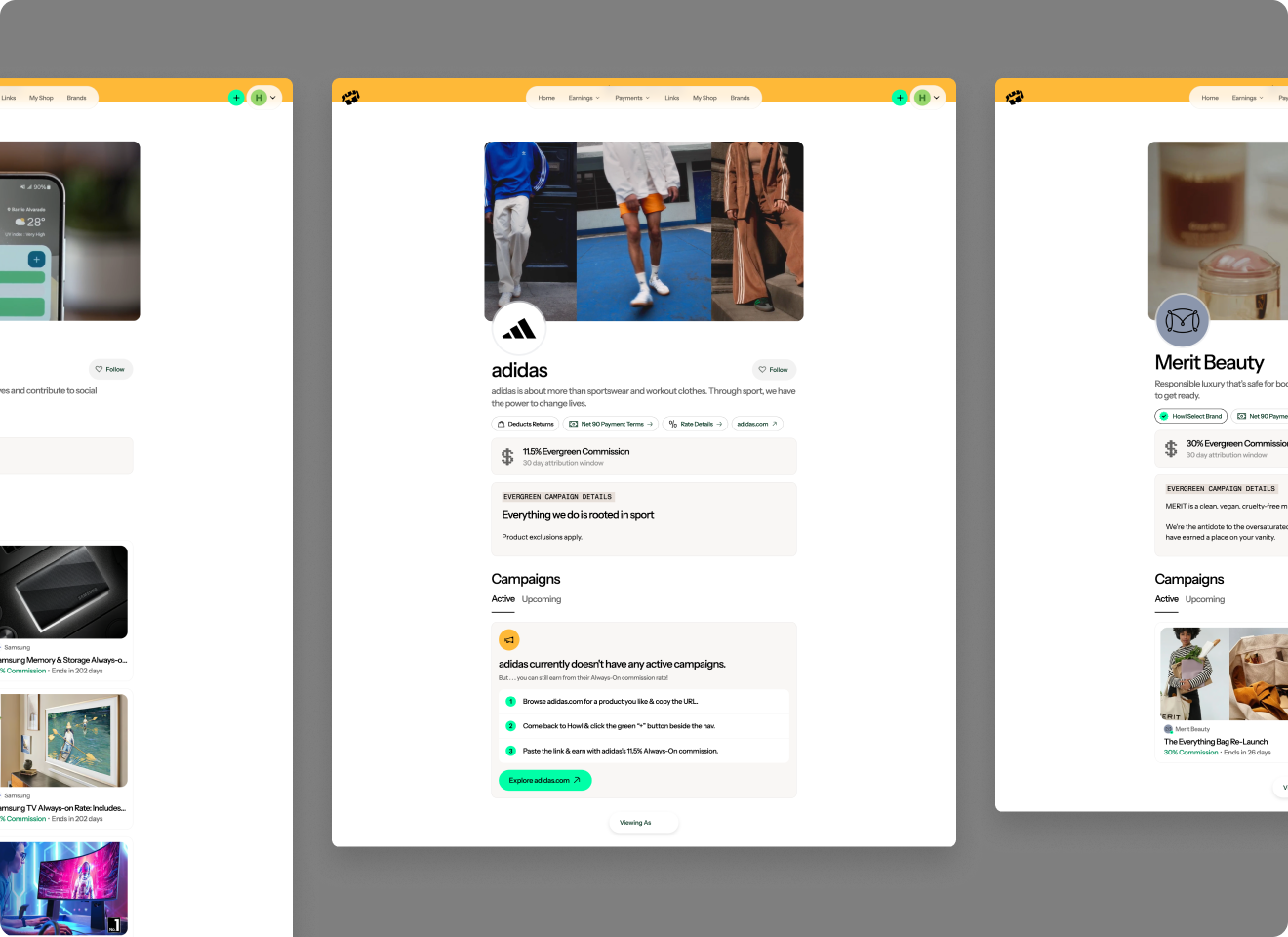
When Howl launched in 2024, brand pages were the entry point for creators, a place to find campaigns and generate links. But they only worked in one direction. Brands had no way to communicate why creators should work with them, and no way to know which creators wanted in.
The second gap opened as brands launched more campaigns. There was no holistic view of how a campaign performed, so every question about results meant partnerships pulling reports by hand.
Creators were left to figure out how to earn on their own. Brands were left without a read on what they were getting for their investment.

Howl
Marketplace
Working with Howl's CEO, VP of Product, and CTO, I rebuilt brand pages into creator programs, introduced creator-requested offers, and designed campaign reports with Samsung as a launch partner.
Role
Principal Product Designer
2025
Responsibilities
Design
UX Research
Principal Product Designer
2025
Responsibilities
Design
UX Research
The challenge
What was missing
I worked with our Brand Partnerships team to understand how brands and creators actually entered the platform. What surfaced was a language gap that turned out to be a product gap. Partnerships talked about creator programs, an ongoing relationship with benefits and upcoming opportunities.
What brands needed
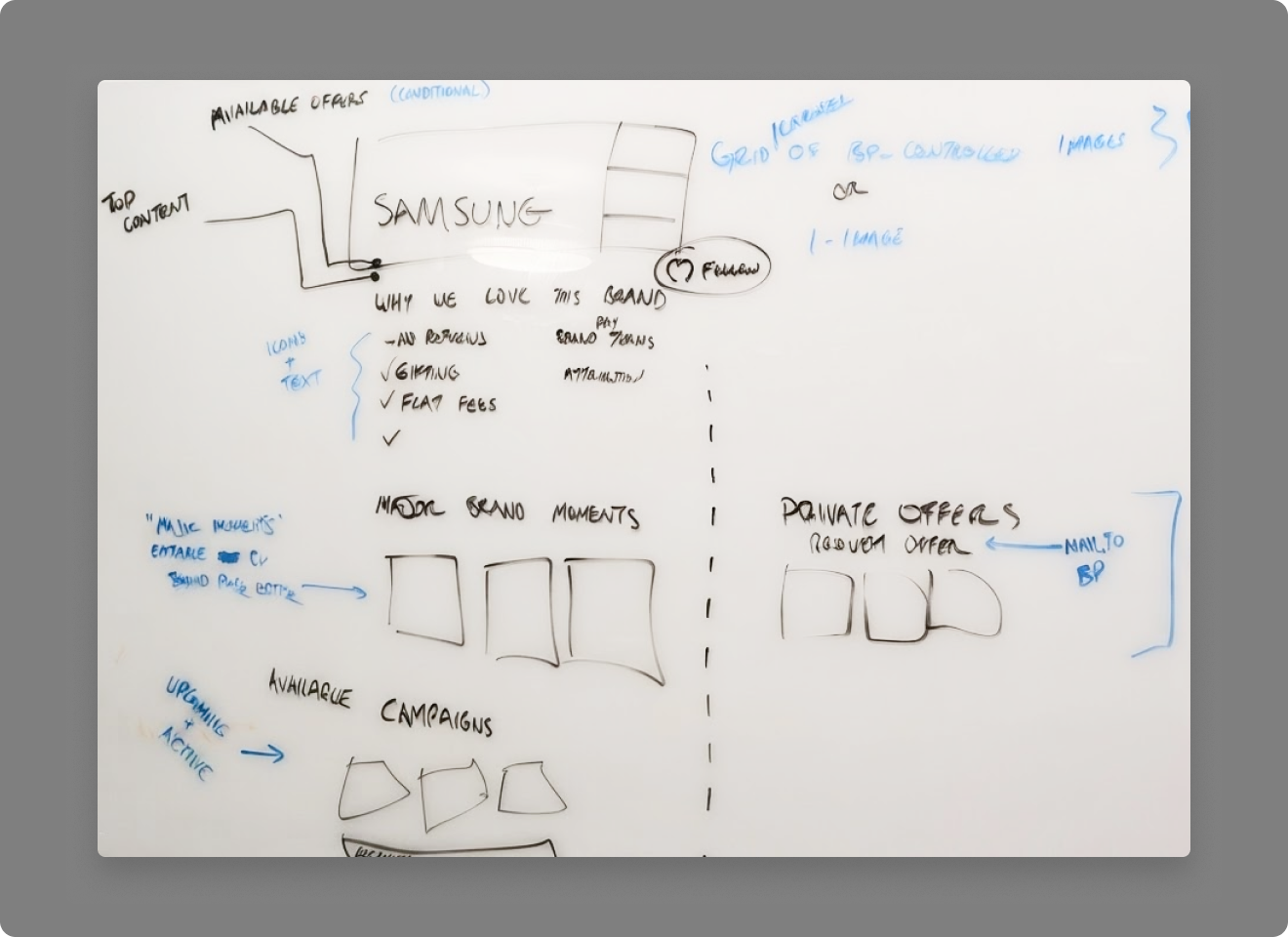
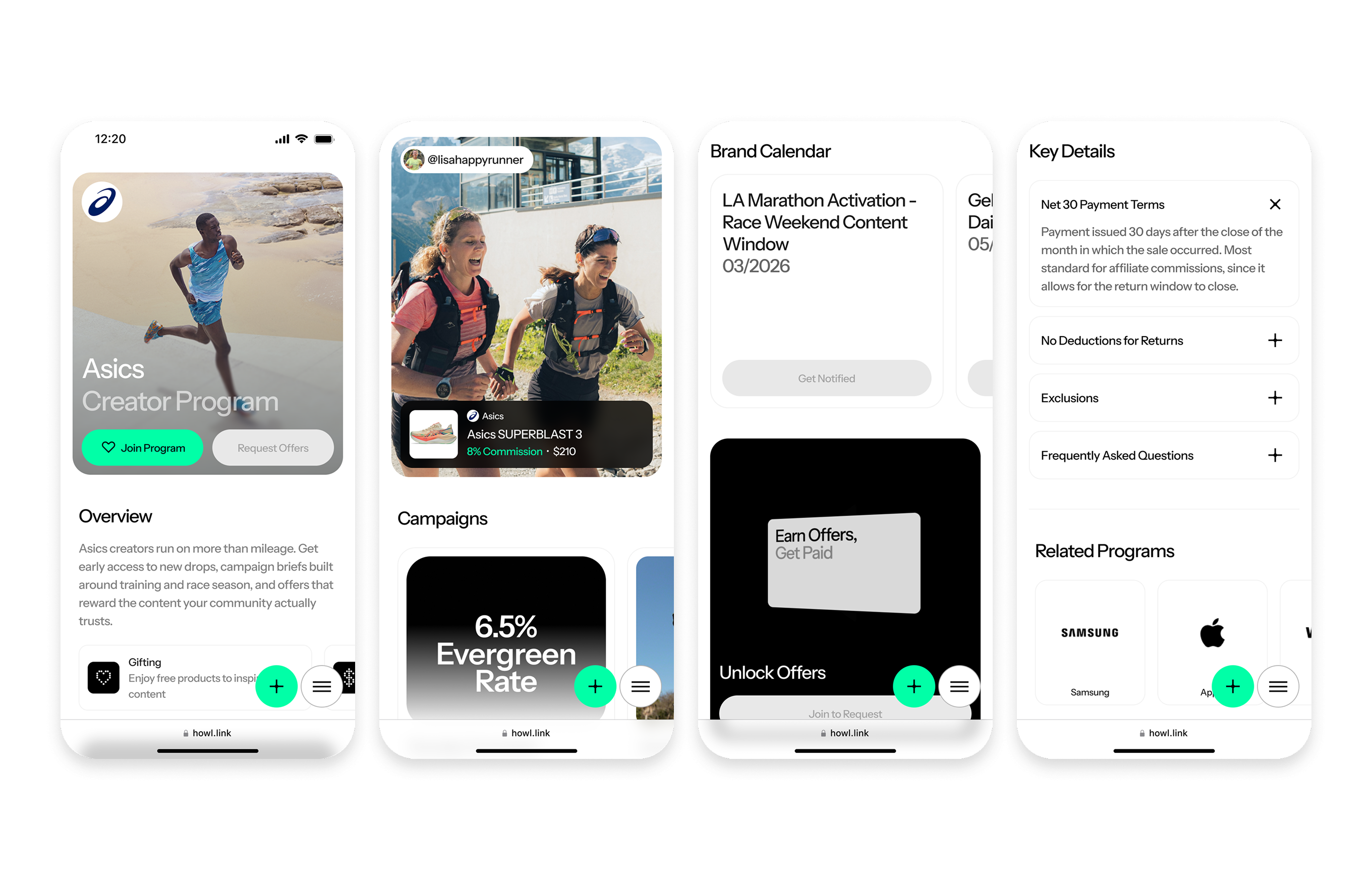
Working with our CEO, VP of Product, and CTO, we sketched what a program page had to carry. After much discussion we landed on the benefits of joining, what was coming next, proof of who was already earning, and a path for creators to ask for more.
The solution
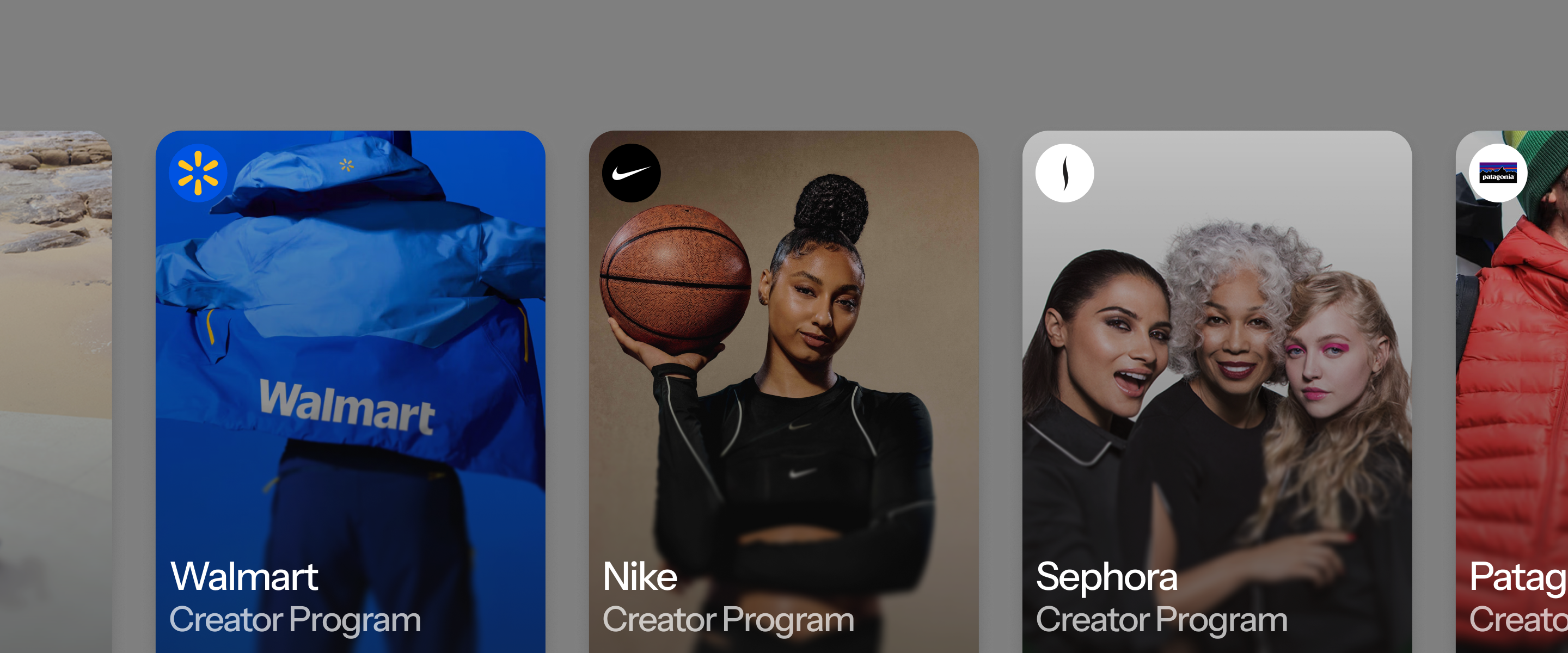
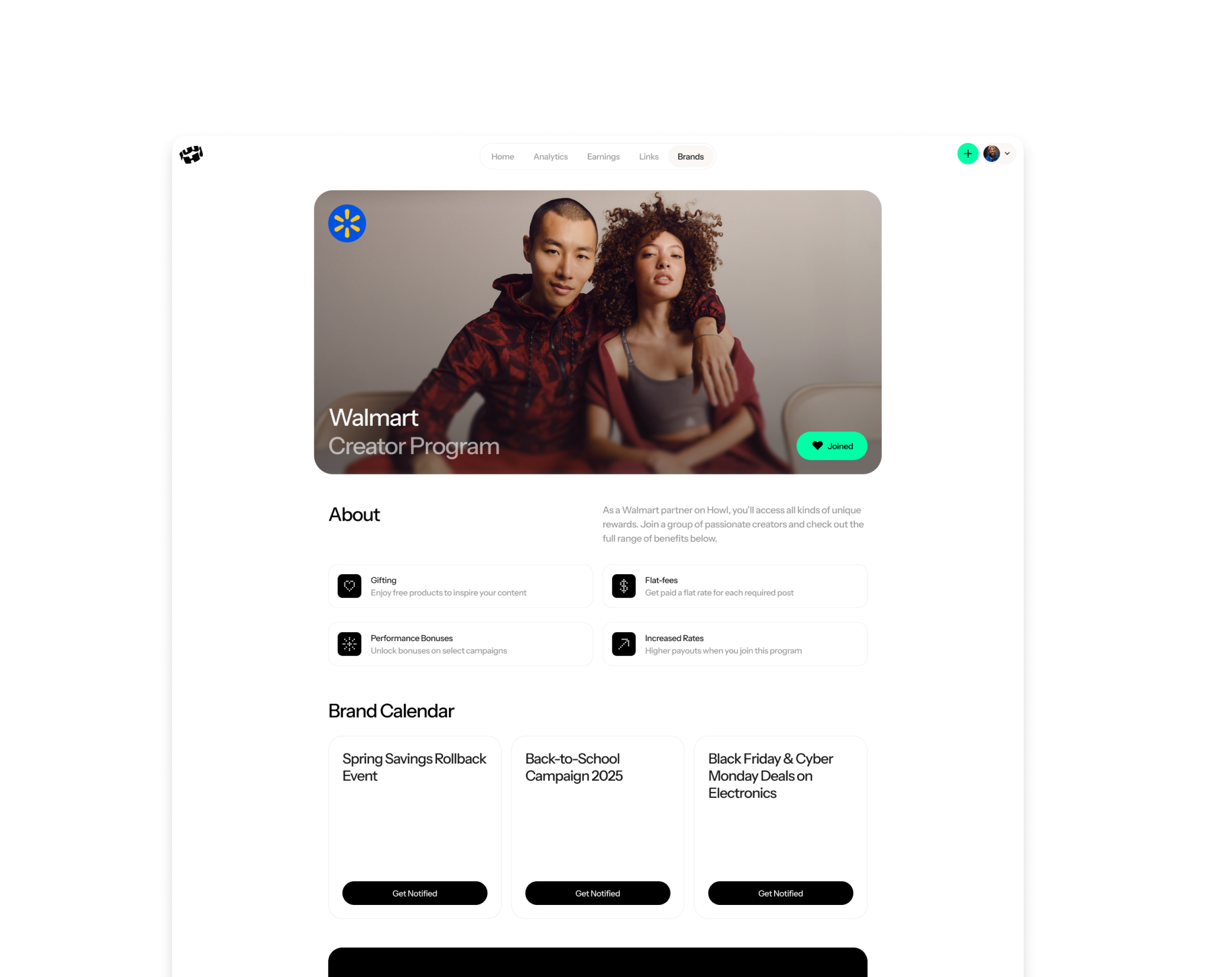
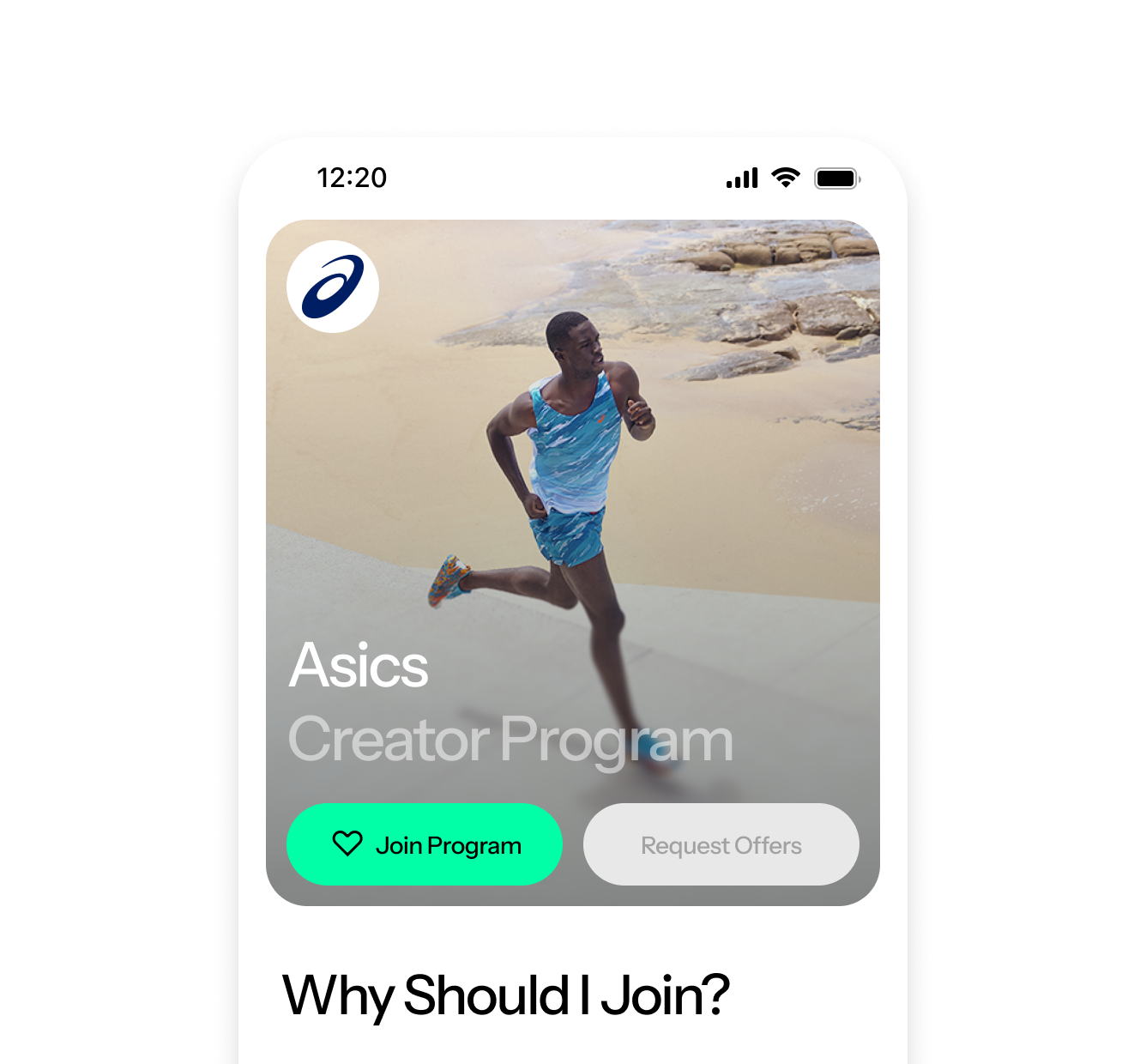
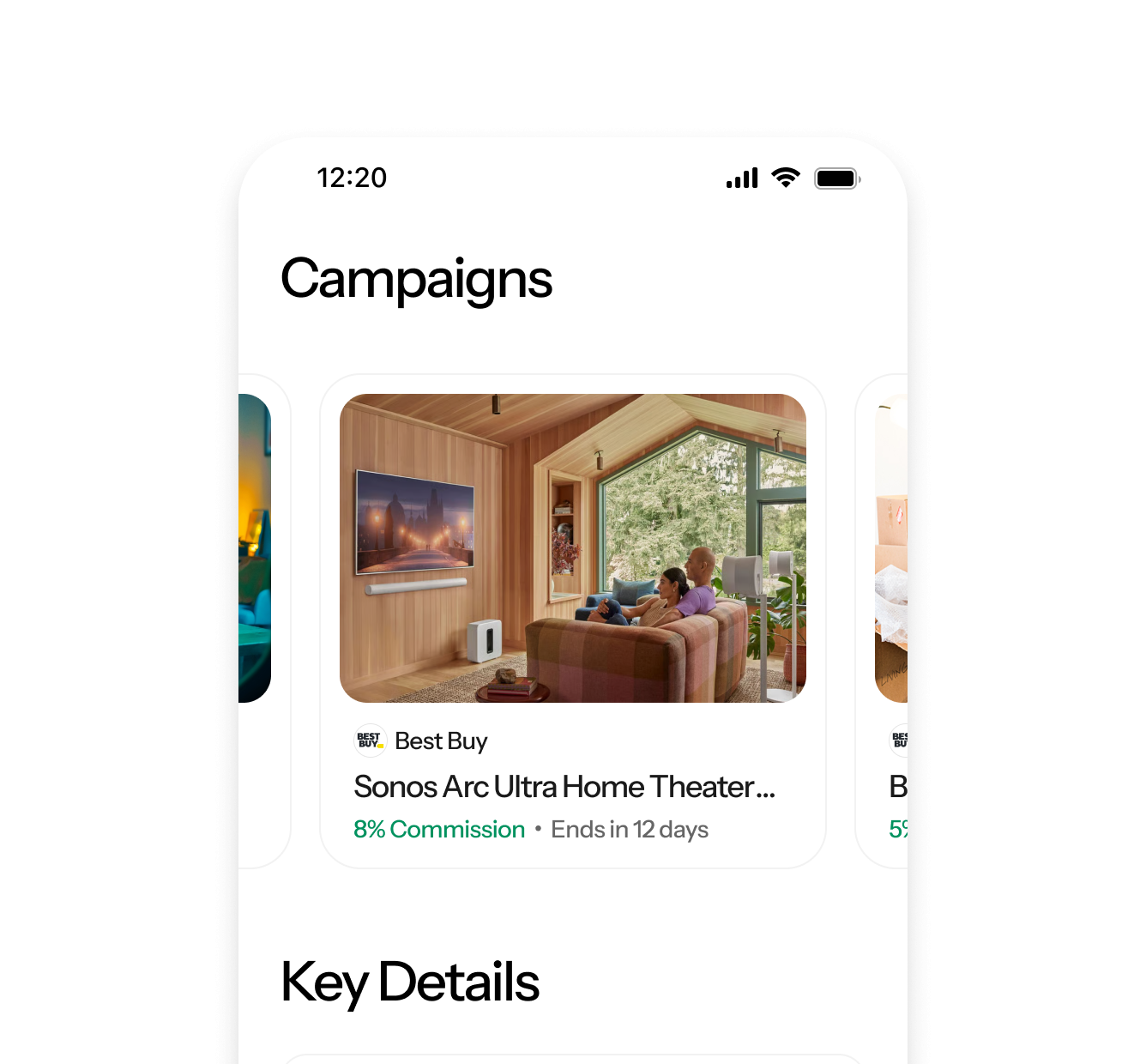
Instead of brand pages, our product team started looking at them as creator programs. That reframe changed the question from "what campaigns are live?" to "what does a creator need to succeed here?"
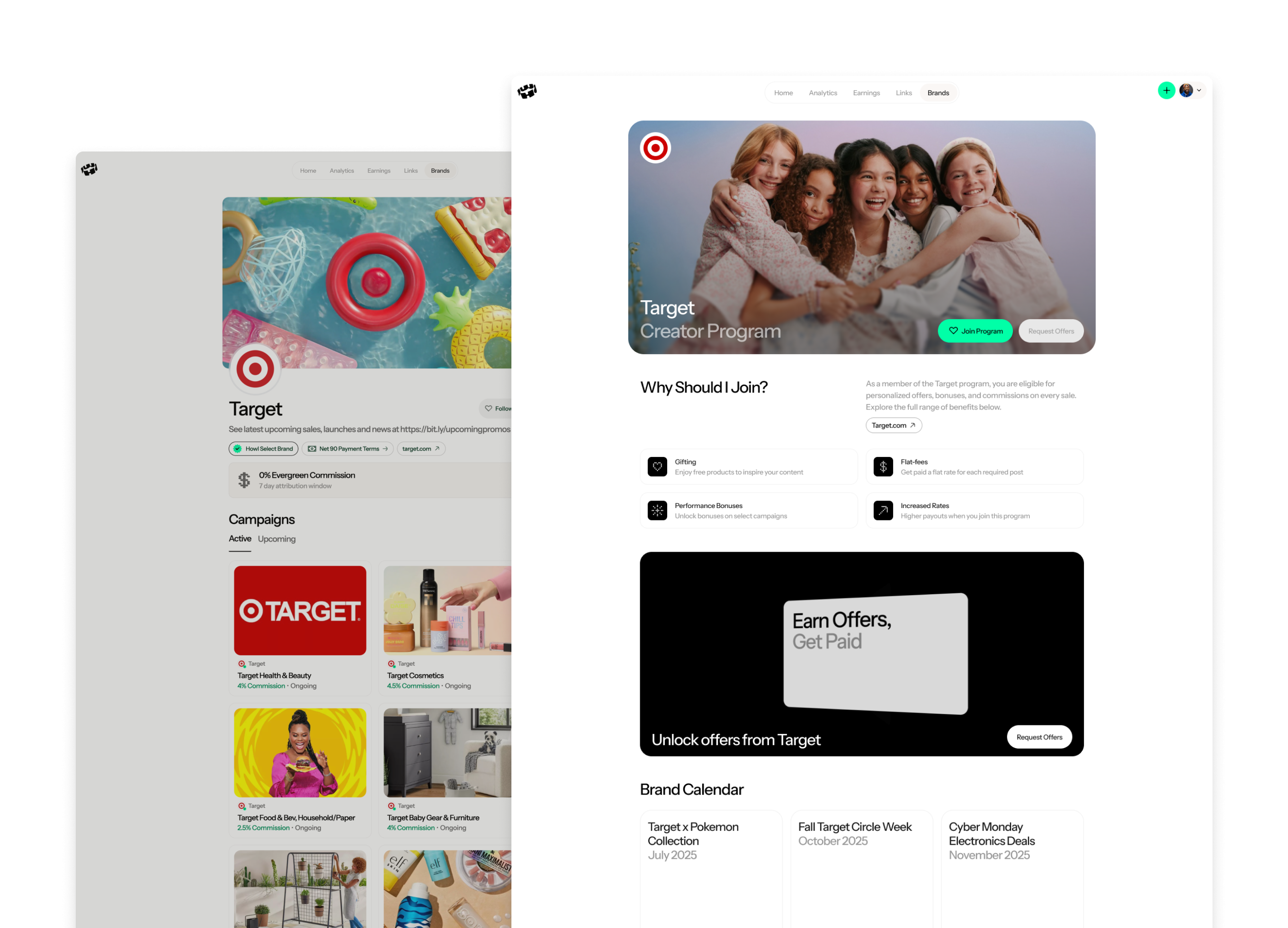
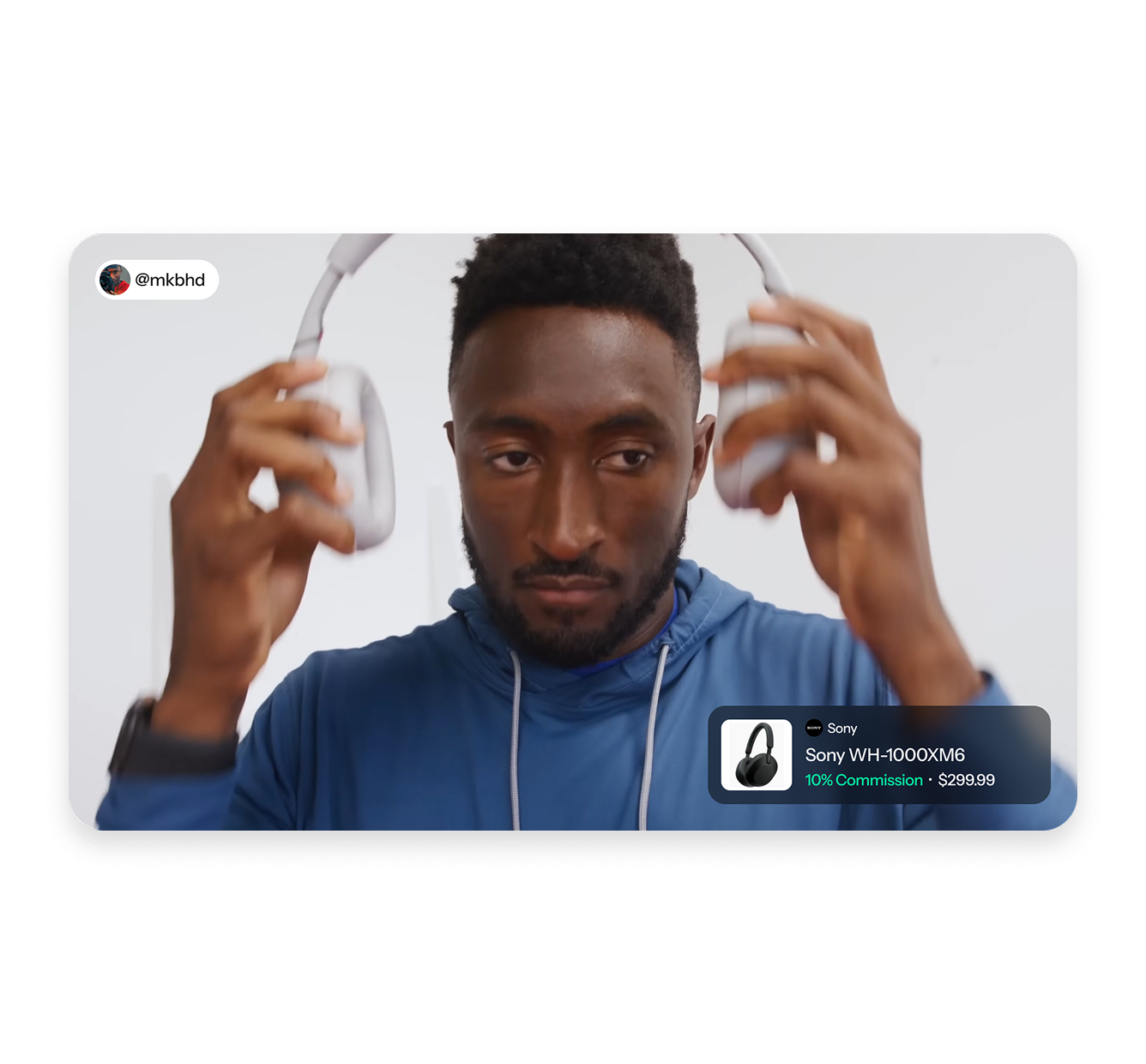
I surfaced the details creators used to ask for, added a brand calendar so brands could tease what was coming, a product launch or a Black Friday push, and gave top creators room on the page by featuring their content directly, associating them with the brands they worked with.
I surfaced the details creators used to ask for, added a brand calendar so brands could tease what was coming, a product launch or a Black Friday push, and gave top creators room on the page by featuring their content directly, associating them with the brands they worked with.
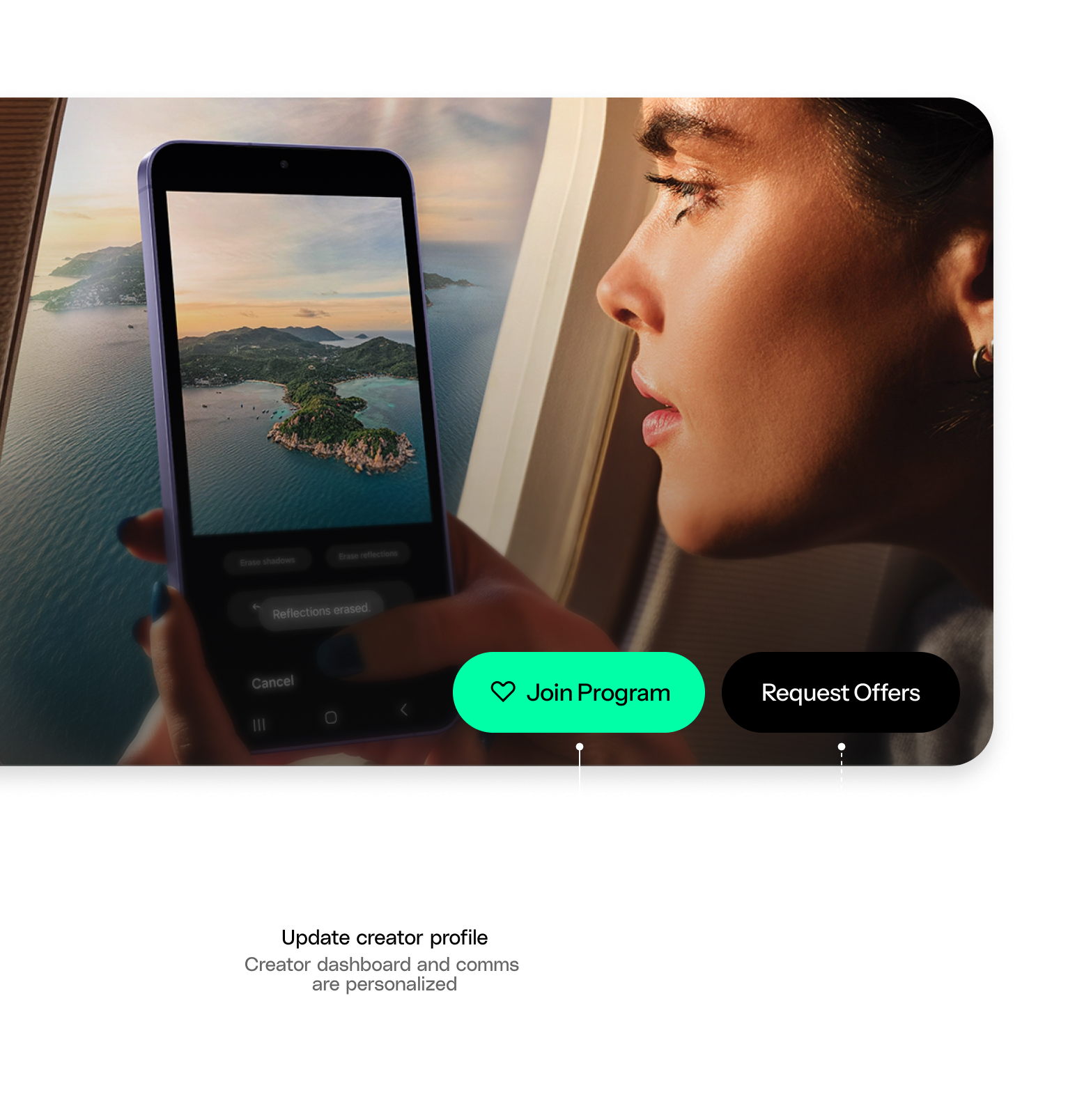
Requesting offers
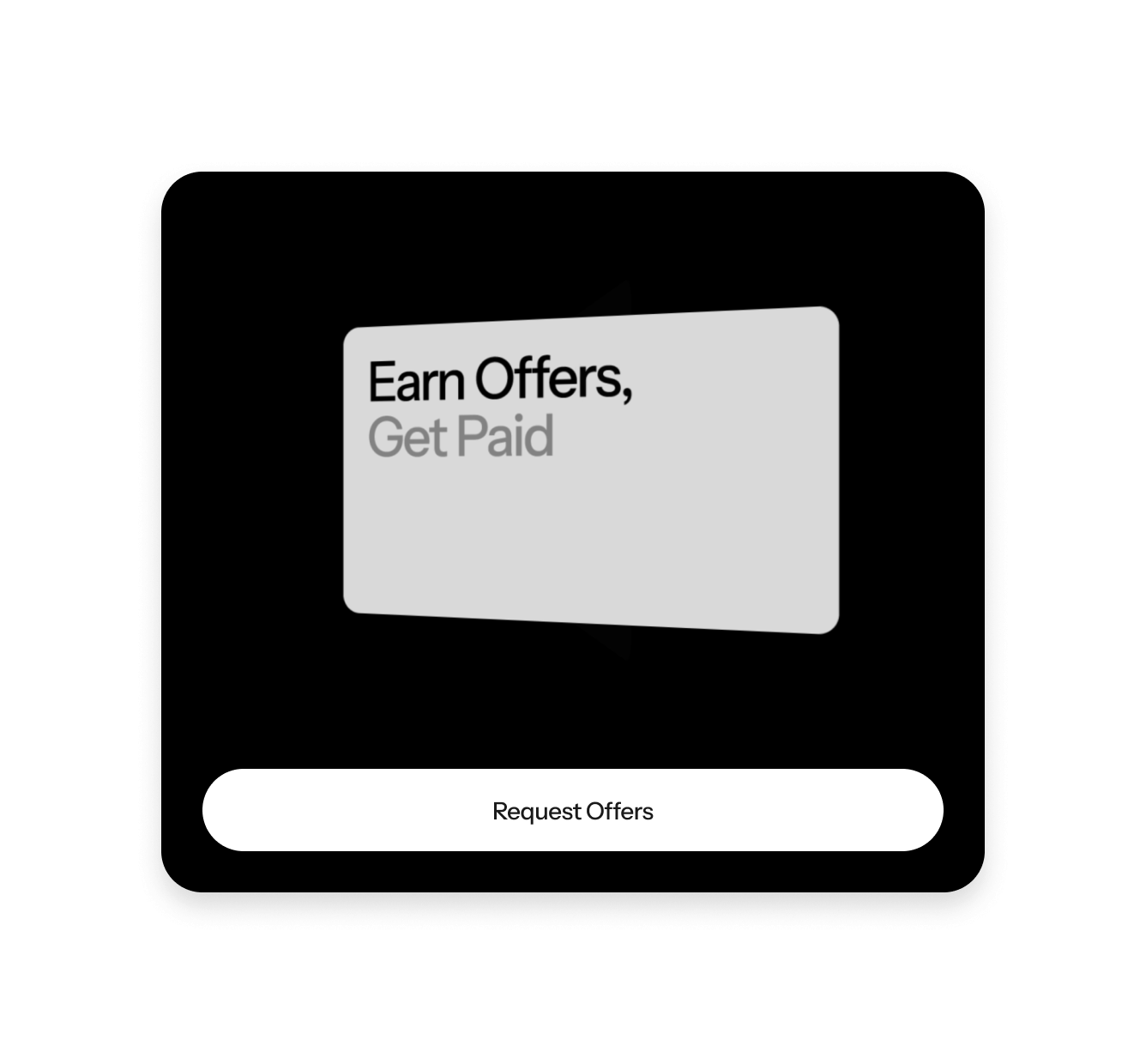
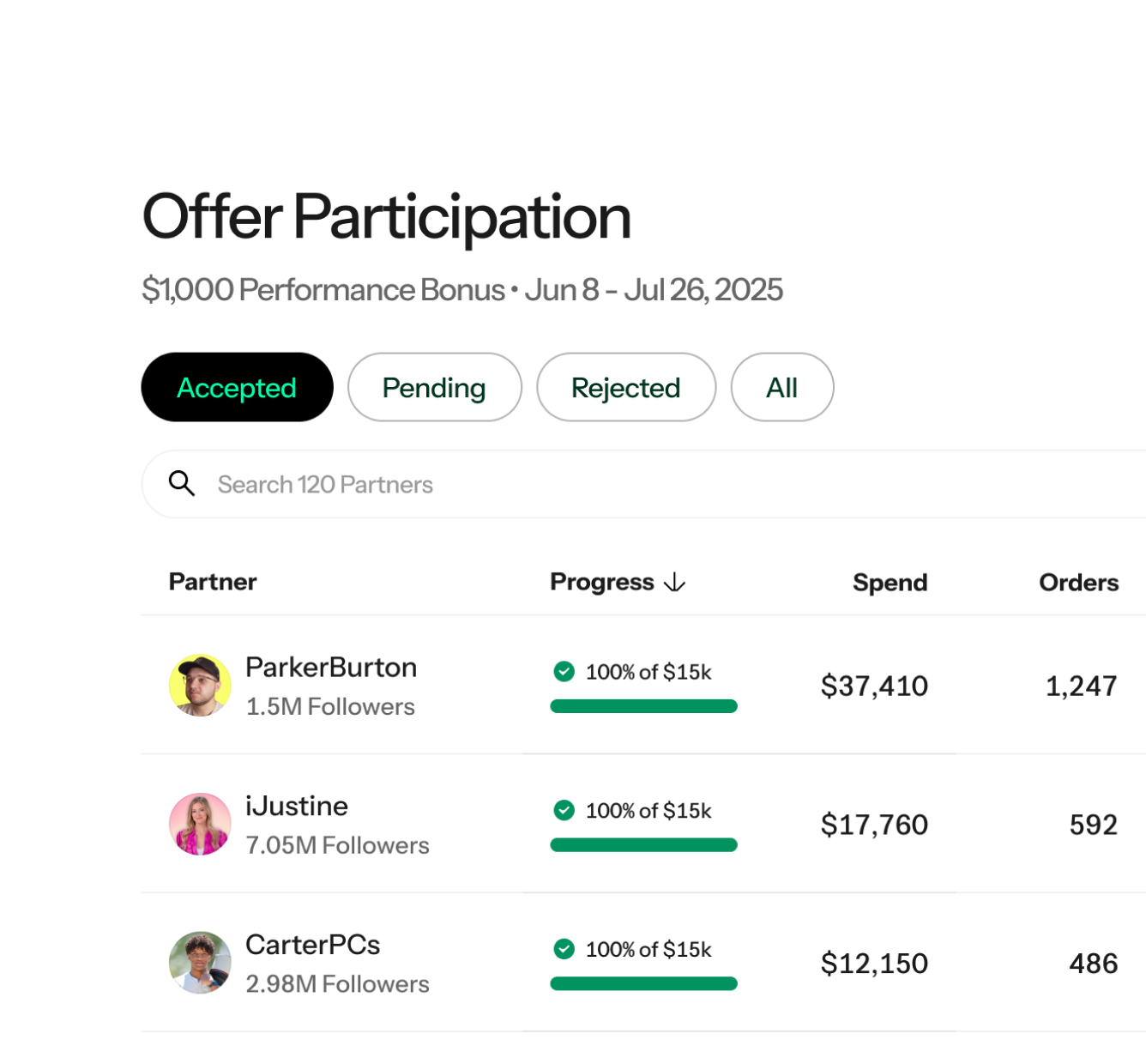
Offers were Howl's differentiator, but creators only saw one if a brand invited them. I built offer requesting directly into program pages. Each request enters a database and notifies the brand, who can then vet the creator and decide who earns the deal.
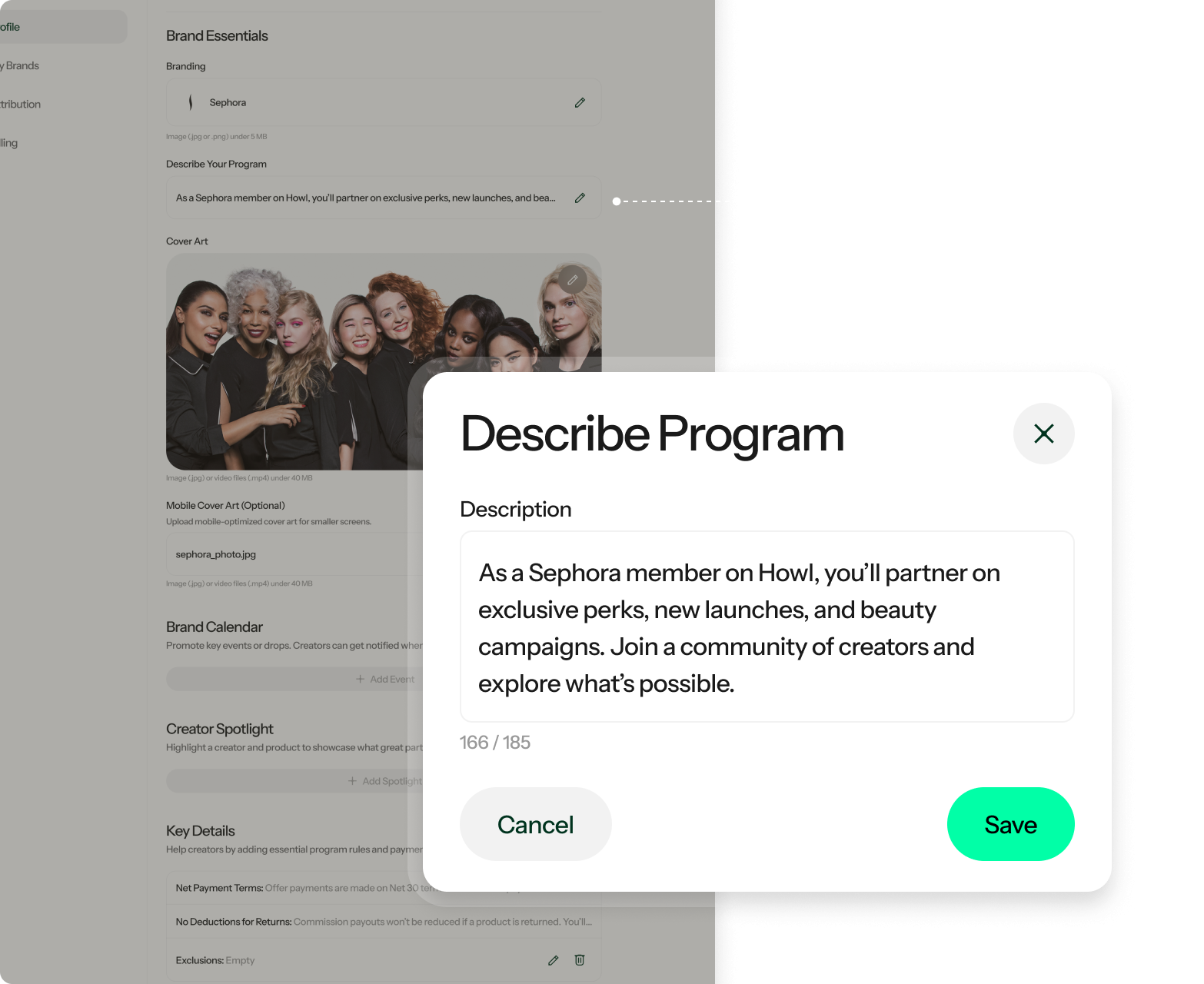
Handing brands the keys
Redesigning the program page meant redesigning how brands configured it. I rebuilt the configuration panel so brands could add program details, enable offer requesting, feature creators, and maintain a calendar they update over time.
Brands could now shape the page around the creators they wanted, without going through partnerships.
Brands could now shape the page around the creators they wanted, without going through partnerships.
What brands needed
Meeting creators where they are
Most creators generated links from the Chrome extension or their dashboard feed, not by browsing brand pages. Leading with active campaigns answered a question they'd already solved, so program benefits became the focal point instead.
Premium, minus the price tag
We explored charging for premium program pages with offers, calendars, and richer content. Instead we gave premium to our most active brands and migrated everyone else onto basic pages, until they could fill the gaps a premium page covered.
Getting brands back in the product
Brands had almost no reason to log in before this. Making pages and reports self-serve gave them something to come back for, and every return visit kept them closer to the platform.
What brands needed
Campaign reports
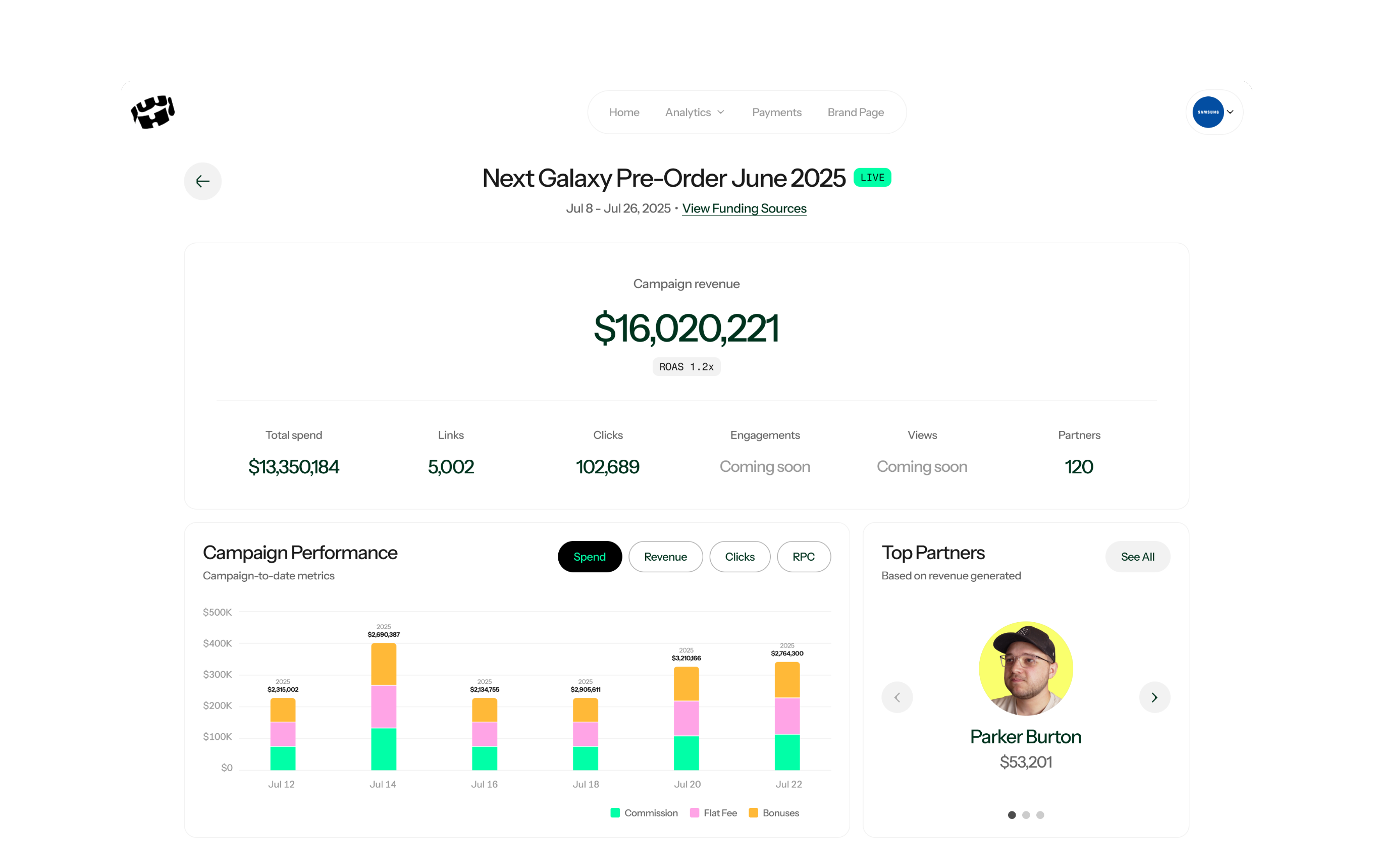
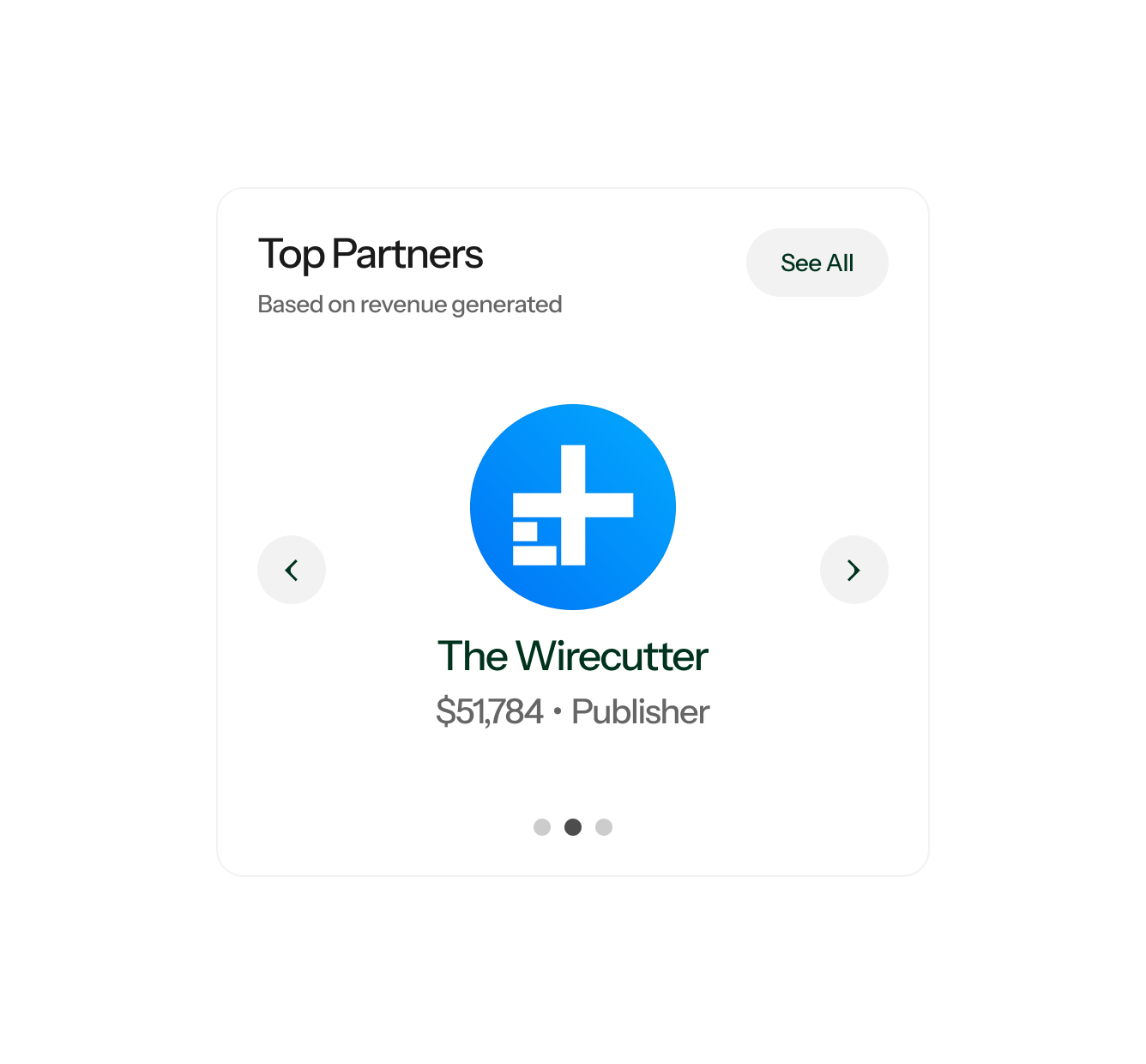
The report became the campaign's source of truth. One place a brand could return to for how it performed, who participated, and what content it produced, instead of assembling the answer across pages.
I designed it in collaboration with brands directly, alongside partnerships, product, and engineering, to make sure the data was complete enough for a brand to take back to their own team and report on Howl's performance. Samsung came on as a launch partner and shaped it through early feedback. In a lot of cases it became their success story.
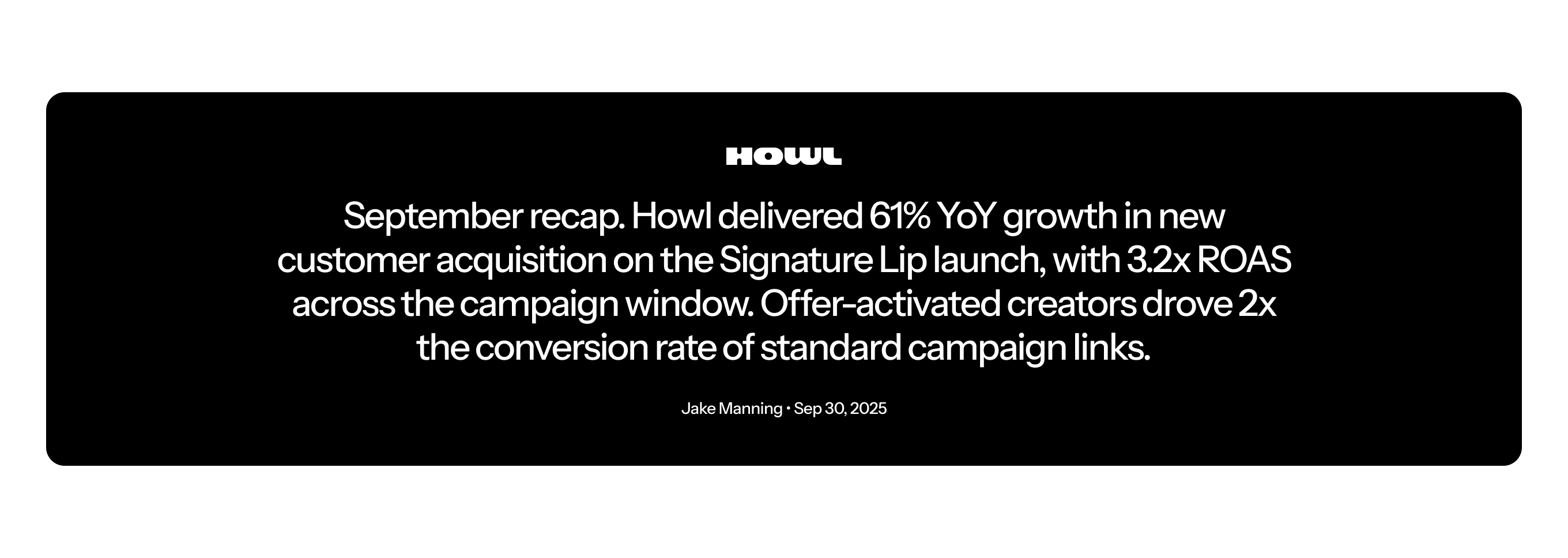
Partnerships wanted every metric, because brands asked for every metric. I pushed for a simpler view led by participation and ROI, with room for Howl to add commentary directly on the report. A cluttered report is harder to act on.
I designed it in collaboration with brands directly, alongside partnerships, product, and engineering, to make sure the data was complete enough for a brand to take back to their own team and report on Howl's performance. Samsung came on as a launch partner and shaped it through early feedback. In a lot of cases it became their success story.
Partnerships wanted every metric, because brands asked for every metric. I pushed for a simpler view led by participation and ROI, with room for Howl to add commentary directly on the report. A cluttered report is harder to act on.
Results
In the end, brands got two things they'd never had: a page that made the case for working with them, and a report that told them whether it worked. Creators got visibility into what a brand offered and a way to raise their hand for it, rather than waiting to be discovered.
Program pages launched with Samsung, who also shaped campaign reports through early feedback. Offer requests came in immediately, which changed the conversations partnerships were having with brands about who to invest in, right as the platform ramped into fall.
Program pages launched with Samsung, who also shaped campaign reports through early feedback. Offer requests came in immediately, which changed the conversations partnerships were having with brands about who to invest in, right as the platform ramped into fall.
Where it went next
Brand pages launched with Samsung, who also shaped campaign reports through early feedback. Offer requests came in immediately, which changed the conversations partnerships were having with brands about sending offers to top creators, right as the platform was ramping into the fall season.
That momentum pointed at the next problem. Campaigns and offers deserved more room than the dashboard was giving them, so the work moved on to rebuilding the creator dashboard and onboarding around them.
That momentum pointed at the next problem. Campaigns and offers deserved more room than the dashboard was giving them, so the work moved on to rebuilding the creator dashboard and onboarding around them.